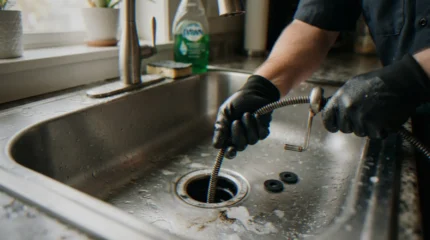
If you ignore it long enough, a simple clog can turn into a much bigger, more expensive problem. Drain snaking (also called drain augering) is one of the most effective and widely used methods for clearing clogged pipes.
When inserted into a drain, the snake winds through the pipe until it reaches the clog, then either breaks it apart or hooks into it so it can be pulled out entirely.
At Clark County Plumbing & Drain, we’ve seen it all. We know how frustrating it is to pour drain cleaner down a sink for the third time in a month and still watch the water pool at your feet. If you’re dealing with a stubborn clog in Clark County, our licensed plumbers are ready to diagnose the problem, clear the blockage, and get your pipes flowing freely again.
How Do I Know When My Drain Needs to Be Snaked?
- The most common sign is your drain moving slowly and not improving no matter what you try. If you’ve already used a plunger or a store-bought drain cleaner and the water is still draining at a crawl, there’s likely a solid blockage deeper in the pipe that needs to be physically broken up or removed.
- Gurgling or bubbling sounds coming from your drains are another red flag. That noise happens when air is trapped behind a blockage and forced back up through the water sitting in your pipes.
- Bad smells coming from your drains are also a sign of trouble. When organic material like hair, grease, or food waste builds up inside a pipe, it starts to decompose. That creates a foul odor that no amount of air freshener will fix.
- And if you’re dealing with a clog that keeps coming back, that’s a strong signal that whatever is blocking your drain hasn’t been fully cleared. A quick fix might restore flow temporarily, but the underlying blockage is still there, growing larger every time it catches more debris.
Types of Drain Snakes
A snake can be used on just about any drain in your home or business as long as you’re using the right type of snake for the job:
- A handheld drum auger is a compact, manually operated snake that’s ideal for smaller drains like bathroom sinks or tub drains.
- A toilet auger, sometimes called a closet auger, is specifically designed for use in toilets.
- A drum auger is motor-driven, which means it can push the cable through longer pipe runs and through tougher clogs with more force and control.
- A flat tape auger, also called a flat wire snake, is used for smaller drain lines where a coiled cable might not fit as easily.
- A sectional drain auger is a heavy-duty machine that uses multiple cable sections connected together.
- A mini drain auger is a lightweight, compact tool for small, easily accessible clogs.
Using the wrong type of snake on the wrong drain is one of the most common mistakes we see with DIY attempts, and it can make your situation worse instead of better. This is why it’s best to have a professional take care of your pipes.
Professional Drain Snaking: Our Process
When one of Clark County Plumbing & Drain’s licensed plumbers arrives at your home to perform a drain snaking service, here’s what you can expect:
- We start with a diagnosis. Before we touch your drain, we want to understand what we’re dealing with. We’ll ask you about the symptoms (how long the drain has been slow, whether it’s one fixture or multiple, whether you’ve noticed any smells or sounds), and we’ll inspect the problem area.
- Once we’ve identified the blockage, we’ll select the appropriate snake for your drain and pipe size. We use professional-grade equipment that’s designed to clear blockages safely and thoroughly, without damaging your pipes in the process.
- Then we insert the snake, locate the clog, and work through it, either breaking it apart or extracting it entirely. After the clog is cleared, we run water through the line to confirm full flow has been restored and to check for any additional issues further down the pipe.
- Before we leave, we’ll walk you through what we found, what we did, and whether there’s anything you should watch for going forward.
What if Snaking Doesn’t Fix the Problem?
Sometimes a clog is more than a clog. If we snake your drain and the problem persists (or comes back quickly), that tells us something important: the issue could be something structural. The long-term fix usually involves either hydro jetting, a pipe repair, or trenchless relining.
Whatever the underlying cause of your blockage, we’ll find it and give you a clear explanation of what the repair involves, how long it will take, and what it will cost: no guesswork, no surprises.
Drain Snaking vs. Hydro Jetting
Drain snaking is typically the first line of defense. It’s the right tool for localized clogs: a clump of hair blocking a shower drain, a small grease buildup in a kitchen sink line, or a solid object lodged in a toilet.
Snaking physically breaks up or removes the obstruction and restores flow quickly. It’s less invasive, costs less than hydro jetting, and is perfectly effective for the majority of household drain clogs.
However, hydro jetting is the better choice in certain situations. It uses high-pressure water (typically between 3,000 and 4,000 PSI) to scour the inside of your pipes clean.
This is great for when the blockage is deep in the main sewer line, there is heavy grease or scale buildup inside the pipes, you’re dealing with recurring clogs that snaking hasn’t been able to fully resolve, or your pipes need to be prepped for trenchless relining or another repair.
At Clark County Plumbing & Drain, we’ll never push a more expensive service on you if a simple snake is all you need. We always assess the condition of your plumbing before recommending a course of action. Our job is to fix your problem, not to upsell you.
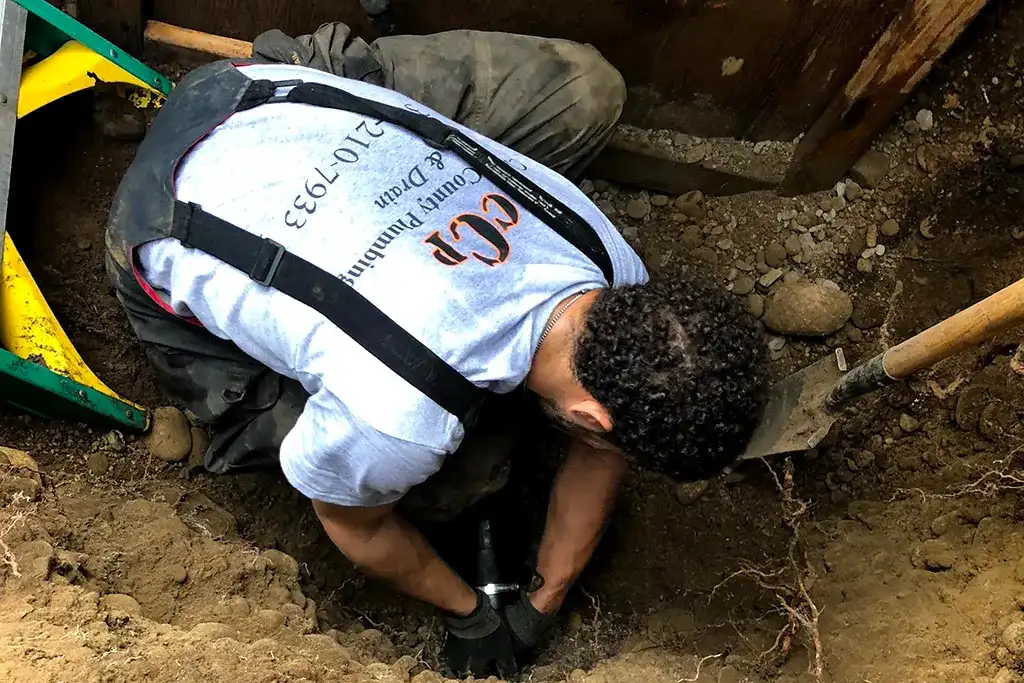
Plumbing Services with Integrity
As a local, independent plumbing company in Clark County, we believe in treating you with the respect you deserve. You’ll always get fair and transparent pricing with us, and we’ll never try to upsell you on something you don’t need.

Leave your information below and we’ll be in touch.
Can I Snake My Own Drain?
Yes, you can snake your own drain. For simple, surface-level clogs, a basic drain snake from the hardware store might do the job. But there are real risks involved that are worth understanding before you grab a tool and start feeding cable into your pipes:
- Pipe Damage: If you use too much force, push the snake too aggressively, or use the wrong type of snake for the pipe size or material, you can crack, scratch, or puncture your pipes.
- Worsening the Clog: If you don’t reach the full extent of the blockage and only partially break it up, you can compact the debris further into the pipe, creating a denser clog that’s even harder to clear.
- Personal Safety: Drain snakes (especially motorized ones) can snap back unexpectedly if the cable kinks or catches on something inside the pipe. The spinning cable can cause lacerations if it wraps around your hand or wrist.
- Repeated Clogs: If you’re snaking your drain every few weeks and the clog keeps coming back, there’s an underlying issue that a snake isn’t going to fix. This could be heavy buildup on the pipe walls, a damaged pipe, root intrusion, or something else entirely.
How to Use a Drain Snake
But if you’re a homeowner who wants to try clearing a clog yourself before calling a plumber, knowing how to use a drain snake properly is important. Here’s how the process works, from start to finish:
- Before you do anything, put on rubber gloves and lay down some old towels around the drain area. Drain snaking is a messy job: the cable will come back out covered in whatever was clogging the pipe, and water can splash during the process.
- Then remove the drain cover or stopper. Most sink and tub drains have a cover or stopper that needs to be removed before you can insert the snake. For sinks, this is usually a pop-up stopper that can be lifted or unscrewed. For tub drains, you may need a screwdriver to remove the cover.
- Insert the drain snake by feeding the tip of the snake into the drain opening. Start slowly and guide it by hand until you feel resistance from the pipe walls or curves. Don’t force it, let the cable follow the path of the pipe naturally. If you’re using a handheld drum auger, turn the handle clockwise as you feed the cable in.
- Locate and break the clog. As you push the snake deeper into the pipe, you’ll eventually feel it make contact with the blockage. You’ll notice increased resistance, and the cable will be harder to push forward. Once you’ve located the clog, continue turning the handle to work the tip of the snake into the obstruction.
- Once you feel the resistance ease up, slowly pull the snake back out of the drain. Do this carefully and continue turning the handle so the cable coils back up cleanly. Have a bucket or trash bag ready. Whatever the snake hooked into is coming out with it, and it won’t be pretty.
- Clean up by running hot water down the drain for a few minutes to flush out any remaining debris and confirm that the clog has been cleared. Then clean the snake cable thoroughly before storing it, and dispose of any debris that was pulled from the drain.
Call Clark County Plumbing & Drain for Your Clogs
If you’ve got a slow sink, a backed-up tub, a toilet that won’t clear, or a main line that’s giving you trouble, Clark County Plumbing & Drain is ready to help. We serve homeowners and businesses throughout Clark County WA, including Vancouver, Camas, Washougal, Battle Ground, and the surrounding areas.
So don’t let a clog disrupt your day any longer than it has to. Call us at 360-469-3044 or get in touch online here to schedule drain snaking service. Let us get your pipes flowing freely again, done right the first time.